A coal seam is an important geological feature that helps identify and evaluate underground coal deposits. Its characteristics influence coal exploration, mining operations, and the availability of coal for various industrial and energy applications. Understanding a coal seam begins with its definition, formation, and geological significance.
What Is a Coal Seam?
A coal seam is a naturally occurring layer of coal found between other sedimentary rock layers beneath the Earth’s surface. It forms when accumulated plant material is buried, compressed, and transformed into coal over millions of years.
Coal seams may occur close to the ground surface or at considerable depths underground. Their thickness can range from a few centimetres to several metres or, in exceptional geological settings, tens of metres. The thickness, depth, coal quality, geological structure, and extraction cost determine whether a seam can be mined economically.
Coal seams are important geological resources because they provide coal for electricity generation, industrial heating, steel production, and other industrial applications. Some seams also contain methane gas, commonly known as coal seam gas or coalbed methane.
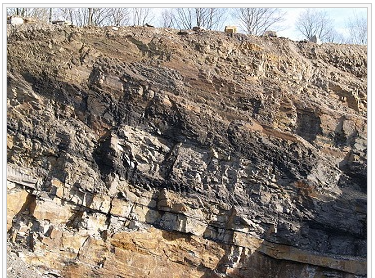
How Does a Coal Seam Look?
A coal seam generally appears as a dark brown or black band enclosed within layers of sandstone, shale, mudstone, or other sedimentary rocks. The coal layer may be continuous over a large area, or it may become thinner, split into smaller layers, or disappear because of changes in geological conditions.
The appearance of a coal seam depends on the coal rank, mineral impurities, moisture content, and surrounding rock formations.
How Are Coal Seams Formed?
Coal seams develop through a natural geological process called coalification. This process transforms plant remains into coal through burial, compaction, and changes in temperature and pressure over geological time.
The main stages of coal seam formation are explained below.
1. Accumulation of Plant Material
Coal formation begins when vegetation grows in ancient swamps, marshes, peat bogs, and other wetland environments. When plants die, their remains accumulate in waterlogged areas.
These environments often contain limited oxygen, which slows the complete decomposition of organic matter and allows plant remains to build up.
2. Formation of Peat
As dead vegetation accumulates, it undergoes partial decomposition. The resulting organic material gradually develops into peat.
Peat is the early stage of coal formation. Its thickness depends on vegetation growth, water conditions, decomposition rates, and the amount of material deposited over time.
3. Burial Under Sediments
Over time, sand, mud, and other sediments cover the peat. Continued deposition increases the depth of burial and compresses the underlying organic material.
As the sediments accumulate, water is expelled and the peat becomes denser. The original plant structure progressively changes.
4. Coalification Under Heat and Pressure
With deeper burial, the increasing temperature and pressure gradually transform the buried organic matter into coal.
The process can continue through different coal ranks, including lignite, sub-bituminous coal, bituminous coal, and anthracite. The final rank depends on the geological history, including the degree of heating, burial, and sometimes tectonic activity.
5. Formation of a Coal Seam
Once coalification has progressed sufficiently, the coal remains as a distinct layer within the surrounding rock formation. This layer is known as a coal seam.
The original peat deposit may have been much thicker than the resulting coal layer. As a rough geological estimate, approximately 10 metres of peat may produce around 1 metre of coal, although the actual ratio varies with the original material and conditions of formation.
Thickness and Depth of a Coal Seam
The thickness and depth of a coal seam are two important factors in coal exploration and mine planning.
Thickness of a Coal Seam
Coal seam thickness is the vertical or true geological thickness of the coal layer, depending on how it is measured and oriented relative to the surrounding strata.
A seam may be thin and difficult to extract mechanically, or thick enough to support large-scale mining operations. There is no single minimum thickness that applies to every coal seam worldwide. The minimum workable thickness depends on mining equipment, local regulations, coal quality, geological conditions, and economic feasibility.
| Coal seam characteristic | Description |
| Thin seam | A relatively small coal layer that may require specialised extraction equipment |
| Medium-thickness seam | A coal layer that can be suitable for mining depending on local conditions |
| Thick seam | A substantial coal deposit that may support large-scale extraction |
| Variable-thickness seam | A seam that becomes thicker or thinner across the deposit |
These descriptions are general, not universal regulatory classifications.
Depth of a Coal Seam
Coal seams can occur at different depths beneath the ground surface.
- Shallow coal seams: Located relatively close to the surface and potentially suitable for surface mining.
- Deep coal seams: Buried beneath substantial layers of rock and generally considered for underground mining.
Depth alone does not determine the mining method. The thickness of overburden, seam inclination, geological discontinuities, land use, environmental restrictions, and extraction economics must also be considered.
Factors Affecting Coal Seam Thickness and Continuity
Coal seams do not always maintain a uniform thickness across a coalfield. Several geological factors influence their dimensions and continuity.
1. Original vegetation: The amount and type of plant material accumulated in ancient wetlands affect the potential coal deposit.
2. Peat accumulation: Differences in water depth, vegetation growth, and decomposition can produce variations in the original peat layer.
3. Sediment deposition: Sand and mud may interrupt peat accumulation, creating separate coal layers or mineral-rich bands.
4. Compaction: The weight of overlying sediments reduces the volume of the buried organic material.
5. Geological movements: Folding, faulting, and other tectonic processes can displace, tilt, or fracture coal seams.
6. Erosion: Erosion may remove parts of a coal-bearing formation or expose coal seams at the surface.
These variations are important when estimating coal reserves and selecting an appropriate mining technique.
Types of Coal Found in Coal Seams
Coal seams can contain different ranks of coal. Coal rank indicates the degree of transformation of the original plant material.
1. Lignite
Lignite is a low-rank coal with relatively high moisture content and generally lower energy content than higher-rank coals. It is commonly used in power plants located near the mining area.
2. Sub-Bituminous Coal
Sub-bituminous coal has a higher carbon content and generally greater energy value than lignite. It is used mainly for electricity generation and industrial heating.
3. Bituminous Coal
Bituminous coal is widely used for power generation and industrial purposes. Certain grades are suitable for producing coke, which is an important material in conventional iron and steel production.
4. Anthracite
Anthracite is a high-rank coal characterised by high fixed-carbon content and relatively low volatile matter. It generally burns with a hot flame and comparatively little smoke when properly used.
The coal rank within a particular seam depends on the geological conditions that affected the deposit over time.
Mining Methods Used to Extract Coal Seams
The mining method depends primarily on the depth and geometry of the coal seam, overburden thickness, ground conditions, and economic feasibility.
1. Surface Mining
Surface mining is used when a coal seam is sufficiently close to the ground surface for the overlying material to be removed economically.
Common surface mining methods include:
- Opencast mining: Overburden is removed to expose the coal deposit for extraction.
- Strip mining: Overburden is removed in successive strips to reach shallow, relatively extensive coal seams.
- Mountaintop removal: In suitable geological settings, the upper portion of a mountain is removed to expose coal deposits.
Surface mining generally allows direct access to the coal seam and can support high production rates. However, it may cause land disturbance, habitat loss, dust generation, and changes to surface drainage.
2. Underground Mining
Underground mining is generally considered when coal seams lie too deep for economical surface extraction or when surface mining is unsuitable.
Common underground mining methods include:
Room-and-pillar mining: Coal is extracted from a network of openings while pillars of coal are left in place to support the overlying rock. Pillars may be recovered partially or completely in some operations, subject to the mine design and ground-control requirements.
Longwall mining: A long section of the coal seam is extracted using specialised cutting equipment. Hydraulic roof supports protect the working area while the roof behind the supports is generally allowed to collapse in a controlled manner.
Underground mining requires careful management of roof stability, ventilation, methane accumulation, coal dust, water ingress, and fire hazards.
What Is Coal Seam Gas?
Coal seam gas, also called coalbed methane (CBM), is natural gas found within coal deposits. It consists mainly of methane, although its composition can vary.
Unlike gas stored primarily in conventional porous reservoir rocks, methane in coal is commonly adsorbed onto the internal surfaces of the coal. Some gas may also occupy fractures and pores.
Groundwater pressure helps maintain methane adsorption within the coal. To extract the gas, wells are drilled into the coal-bearing formation. Water is often pumped out to reduce pressure, allowing some of the methane to desorb and flow towards the well.
Factors Affecting Coal Seam Gas Production
The quantity of methane present and the rate at which it can be produced depend on several factors:
- Coal seam thickness: Thicker seams may contain more coal and potentially more gas, all else being equal.
- Depth: Burial depth influences pressure, temperature, and gas retention.
- Gas content: The quantity of methane stored in the coal affects the available resource.
- Permeability: Natural fractures and cleats control how easily gas and water can move through the seam.
- Water pressure: Reservoir pressure influences methane adsorption and production behaviour.
- Coal characteristics: Coal rank, pore structure, and geological history affect gas storage and movement.
Coal seam gas can be used as a fuel for electricity generation, industrial heating, and other energy applications. Its development also requires consideration of groundwater management, methane leakage, and associated environmental impacts.
Coal Seam Fires: Causes, Effects, and Hazards
A coal seam fire occurs when coal underground ignites and continues to burn or smoulder. These fires may start naturally under certain conditions or result from mining activities, discarded burning materials, lightning, or other ignition sources.
Once established, an underground coal fire can be difficult to extinguish because the burning coal may be buried beneath thick rock layers and connected to air through fractures, abandoned mine workings, or other openings.
Causes of Coal Seam Fires
Common causes include:
- Ignition of exposed coal by surface fires or human activities.
- Spontaneous heating and combustion under favourable conditions.
- Fires originating in mines that spread into adjoining coal deposits.
- Oxygen entering through fractures or abandoned workings.
Spontaneous combustion depends on factors such as coal properties, oxygen availability, heat accumulation, moisture, and ventilation conditions.
Effects of Coal Seam Fires
1. Air pollution: Burning coal releases carbon dioxide, particulate matter, and other combustion products. Depending on the coal composition and burning conditions, pollutants such as sulphur dioxide, carbon monoxide, and mercury may also be released.
2. Ground instability: Underground combustion consumes coal and can create voids, causing surface cracks, subsidence, or damage to nearby infrastructure.
3. Health risks: Smoke and gases can affect people living or working near affected areas. Carbon monoxide is particularly dangerous because it is colourless and odourless.
4. Economic losses: Coal reserves may become inaccessible or unusable, while firefighting, monitoring, and land rehabilitation can be costly.
5. Environmental damage: Persistent fires may damage vegetation, degrade local air quality, and contribute to greenhouse gas emissions.
Example of an Underground Coal Fire
The Centralia mine fire in Pennsylvania, USA, is a widely known example of a long-running underground coal fire. The fire began in 1962 and continued for decades, illustrating how difficult it can be to control combustion within an extensive coal-bearing formation.
Preventing such fires requires effective mine planning, fire-risk assessment, control of ignition sources, monitoring of temperature and gases, and appropriate management of abandoned workings.
Importance of Coal Seams
Coal seams have economic, industrial, and geological significance.
Energy production: Coal extracted from suitable seams is used in thermal power plants to generate electricity.
Industrial applications: Coal supplies heat for several industrial processes. Certain coal grades are used to manufacture coke for ironmaking.
Natural gas resources: Coal seams may contain recoverable methane, providing another potential energy resource.
Geological studies: Coal seams help geologists reconstruct ancient environments, sedimentary processes, and changes in Earth’s vegetation and climate.
Mining and resource planning: Understanding seam thickness, depth, quality, and geological structure helps estimate reserves and design safer, more efficient extraction operations.
Despite their importance, coal extraction and combustion can cause environmental damage and greenhouse gas emissions. Responsible resource management therefore requires attention to mine safety, land rehabilitation, water protection, and emissions reduction.
Coal Seam vs Coal Bed: Is There a Difference?
The terms coal seam and coal bed are often used interchangeably to describe a distinct layer of coal within a rock formation.
In many geological and mining contexts, both terms refer to the same type of deposit. The preferred term may vary by region, technical discipline, or the context in which the deposit is described.
The term coal seam gas is commonly used in Australia, while coalbed methane is widely used in the United States and in international technical literature.
Conclusion
A coal seam is a natural layer of coal formed when ancient plant material accumulates in wetlands, becomes buried beneath sediments, and undergoes coalification over millions of years. Its thickness, depth, coal rank, and geological structure determine how it can be extracted and used.
Coal seams are important sources of solid fossil fuel and can also contain methane suitable for recovery. However, mining and underground coal fires present significant safety and environmental challenges. Understanding the geology of coal seams is therefore essential for mineral exploration, efficient mine design, resource management, and environmental protection.
Frequently Asked Questions About Coal Seams
A coal seam is a naturally formed layer of coal trapped between layers of rock beneath the Earth’s surface. It develops from ancient plant material that was buried and transformed into coal over millions of years.
Coal seam thickness varies considerably. Some seams are less than 30 centimetres thick, while others measure several metres or, in exceptional cases, more than 30 metres. The thickness required for profitable mining depends on geological conditions, mining technology, coal quality, and operating costs.
Coal seams form over geological timescales, generally involving millions of years. The duration depends on the accumulation of plant material, burial history, temperature, pressure, and other geological conditions.
A coal seam is the natural deposit of coal within rock layers. A coal mine is the site and associated infrastructure used to extract coal from that deposit.
Yes. Some coal seams contain methane that can be extracted through specially designed wells. This gas is known as coal seam gas or coalbed methane.
References
- Government of South Australia, Department for Energy and Mining. (2019). Coal Seam Gas [Online]. Available: https://www.energymining.sa.gov.au/industry/energy-resources/geology-and-prospectivity/resource-and-coal-plays/coal-seam-gas
- Australia Pacific LNG. (June 2, 2015). Coal Seam Gas [Online]. Available: http://www.aplng.com.au/home/what-coal-seam-gas
- U.S. Energy Information Administration. (October 24, 2023). Coal Explained [Online]. Available: https://www.eia.gov/energyexplained/coal/
Read Next:
- Coefficient of Performance (COP): Formula, Types & Examples
- Power Density: Definition, Formula, Units, Applications
- Energy Intensity: Definition, Formula, Examples
- Joule (J): Definition, Formula, Units, Conversions & Examples
- Energy Density: Definition, Formula, Types, Units, Examples
- EER Chart for Air Conditioners: Good, Average and Excellent Ratings
- EER vs. SEER: What’s the Difference?
- SEER Rating Explained: Complete Guide to AC Efficiency