Net Zero Energy is an approach in which the amount of energy consumed by a building, facility, or system is balanced by the amount of renewable or low-carbon energy generated over a defined period. In simple terms, the objective is to minimize energy demand and then meet the remaining demand through clean energy sources. Net Zero Energy is closely connected with net zero decarbonization because reducing fossil-fuel energy consumption can also reduce greenhouse gas emissions.
The concept is particularly important for buildings, industries, and energy systems that are working toward long-term net zero emissions pathways. Achieving net zero requires more than installing renewable-energy systems; it involves energy efficiency, electrification, renewable generation, low-carbon fuels, energy storage, demand management, and continuous measurement of performance.
What Is Net Zero Energy?
Net Zero Energy refers to a condition where energy consumed over a specified period is balanced by renewable or low-carbon energy generated during that period.
A simple representation is:
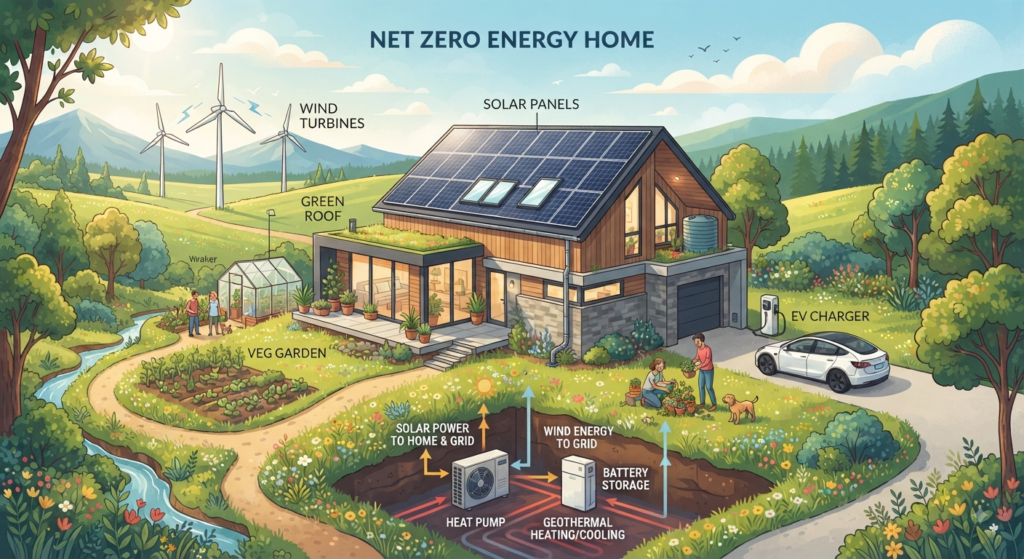
For a building, for example, electricity consumption during the year may be balanced by electricity generated from rooftop solar panels. The concept therefore focuses on annual energy balance, rather than requiring the building to generate all of its electricity at every moment.
The New Buildings Institute describes net zero energy buildings in terms of producing as much renewable energy as they consume over a year, with performance verified using measured data.
Net Zero Energy vs. Net Zero Emissions
Although the terms are related, Net Zero Energy and Net Zero Emissions do not mean exactly the same thing.
Net Zero Energy primarily focuses on balancing energy consumption with renewable or low-carbon energy generation.
Net Zero Emissions focuses on greenhouse-gas emissions. It requires emissions released into the atmosphere to be balanced by emissions removed or otherwise neutralized according to the applicable accounting framework.
For example, a facility could achieve a net-zero energy balance through renewable electricity while still having emissions from natural gas used for heating or industrial processes. Therefore, achieving Net Zero Energy can contribute to net zero decarbonization, but it does not automatically mean that every source of greenhouse-gas emissions has reached net zero.
How Does Net Zero Energy Work?
A successful Net Zero Energy strategy generally follows a hierarchy:
The first priority is to reduce unnecessary energy consumption. Once demand has been minimized, renewable energy can be used to meet the remaining energy requirement.
For buildings, this may involve:
- High-efficiency lighting
- Efficient HVAC systems
- Building insulation
- Efficient motors and pumps
- Smart energy controls
- Daylight utilization
- Energy-efficient appliances
- Rooftop solar PV
- Battery energy storage
- Building energy management systems
The same principle can be applied to industrial facilities through efficient motors, variable-frequency drives, waste-heat recovery, process optimization, electrification, renewable power procurement, and energy monitoring.
Net Zero Energy and Decarbonization
Net zero decarbonization involves progressively reducing dependence on fossil fuels and lowering greenhouse-gas emissions until remaining emissions can be balanced by removals or other permitted measures.
Energy systems are central to this transition because fossil fuels are still used extensively for electricity generation, transportation, industrial processes, and heating.
A typical decarbonization sequence can be represented as:
Energy efficiency reduces the amount of energy required. Electrification can replace fossil-fuel equipment with electric alternatives, particularly where electricity can be supplied from low-carbon sources. Renewable electricity then reduces the emissions associated with electricity consumption.
Where direct electrification is difficult, technologies such as sustainable biofuels, biogas, hydrogen, and other low-emission fuels may have a role.
What Is a Net Zero Emissions Pathway?
A net zero emissions pathway is a planned sequence of actions and milestones designed to reduce greenhouse-gas emissions toward net zero by a specified target year.
A credible pathway normally includes:
- Establishing a baseline – measuring current energy use and greenhouse-gas emissions.
- Setting reduction targets – defining short-, medium-, and long-term targets.
- Improving energy efficiency – reducing energy consumption and energy losses.
- Increasing renewable energy – using onsite generation or renewable electricity procurement.
- Electrifying suitable applications – replacing fossil-fuel equipment where practical.
- Using low-carbon fuels – applying hydrogen, sustainable biofuels, or biogas where appropriate.
- Reducing methane and other high-impact emissions – particularly in sectors where these emissions are significant.
- Monitoring and reporting – measuring actual performance against the pathway.
- Addressing residual emissions – dealing with emissions that cannot reasonably be eliminated.
The pathway should be measurable rather than simply being a long-term declaration. Energy consumption, renewable generation, emissions, efficiency improvements, and progress against targets should be regularly monitored.
Global Net Zero Energy and Net Zero Emissions Context
The International Energy Agency (IEA) uses the Net Zero Emissions by 2050 Scenario as a pathway for transforming the global energy system. The reference material identifies four major pillars: clean-energy electrification, energy efficiency, low-emissions fuels, and methane abatement.
Clean electrification involves increasing the role of renewable and other low-emission electricity technologies. Energy efficiency reduces the amount of energy required to provide the same services. Low-emission fuels can support sectors where direct electrification is difficult, while methane abatement addresses an important source of greenhouse-gas emissions.
The IEA pathway therefore illustrates that achieving net zero is not dependent on one technology. It requires coordinated changes across electricity generation, energy consumption, fuels, industrial processes, transportation, and other sectors.
India’s Net Zero Target
India has announced a target of achieving Net Zero emissions by 2070 as part of its long-term climate strategy.
India’s transition involves balancing economic development, energy security, affordability, and environmental sustainability. This is particularly important because energy demand is expected to increase as industrialization, urbanization, infrastructure development, and living standards continue to grow.
A successful Indian net zero emissions pathway therefore needs to combine:
- Renewable energy expansion
- Energy efficiency
- Electrification
- Grid modernization
- Energy storage
- Green hydrogen and other low-carbon fuels
- Industrial decarbonization
- Sustainable transportation
- Methane reduction
- Digital energy management
The reference material also highlights the increasing importance of AI, smart grids, and digital energy technologies for improving energy efficiency and flexibility.
Net Zero Energy in Buildings
Buildings are an important application of Net Zero Energy because they consume energy for lighting, cooling, heating, ventilation, appliances, water pumping, and other services.
A Net Zero Energy building aims to produce approximately as much renewable energy as it consumes over a defined period, commonly measured over a year.
A typical approach is:
For example, a building can first reduce its cooling and lighting demand through efficient equipment and building design. Rooftop solar can then generate electricity to offset the remaining annual electricity consumption.
Measured energy performance is important because a building should not be considered net zero simply because it contains solar panels. Actual consumption and renewable generation should be evaluated.
How to Achieve Net Zero Energy
1. Conduct an Energy Audit
The first step is to understand where energy is being consumed. An energy audit can identify major energy-consuming equipment, operating patterns, losses, and opportunities for improvement.
2. Reduce Energy Consumption
Energy efficiency should normally be addressed before installing additional generation capacity. Efficient motors, pumps, fans, compressors, lighting, HVAC systems, and process equipment can significantly reduce energy demand.
3. Electrify Fossil-Fuel Loads
Where technically and economically practical, fossil-fuel-based equipment can be replaced with efficient electrical alternatives.
Examples include:
- Electric heat pumps
- Electric vehicles
- Induction heating
- Electric boilers in suitable applications
- Electric process equipment
4. Install Renewable Energy
Solar PV is one of the most accessible renewable-energy technologies for buildings and many commercial facilities. Larger facilities can also use renewable electricity through appropriate power-purchase or procurement arrangements.
5. Add Energy Storage
Battery storage can help shift renewable electricity from periods of high solar generation to periods of higher demand. Storage can also provide backup power and support demand management, depending on the system design.
6. Use Smart Energy Management
Energy meters, sensors, automation, building management systems, and digital platforms can help monitor consumption and identify abnormal energy use.
7. Measure and Verify Performance
Continuous monitoring is essential. Actual energy consumption and renewable generation should be compared with the established baseline and target.
Benefits of Net Zero Energy
Net Zero Energy can provide several environmental, operational, and economic benefits.
Reduced Energy Costs
Energy efficiency and onsite renewable generation can reduce dependence on purchased electricity and fossil fuels.
Lower Carbon Emissions
Reducing fossil-fuel consumption and increasing renewable energy can lower greenhouse-gas emissions.
Improved Energy Security
Generating some energy locally can reduce dependence on external energy supplies.
Better Energy Efficiency
Net-zero projects typically require careful attention to energy performance, encouraging the use of efficient equipment and controls.
Reduced Exposure to Energy Prices
Renewable generation can reduce exposure to fluctuations in conventional energy prices, although project economics depend on the technology, financing, regulations, and energy market.
Improved Building Performance
Energy-efficient buildings can provide improved thermal comfort, lighting quality, and operational control when properly designed.
Challenges of Net Zero Energy
Despite its benefits, achieving Net Zero Energy can involve several challenges.
High Initial Investment
Energy-efficient equipment, renewable-energy systems, batteries, controls, and building improvements may require significant upfront investment.
Intermittency of Renewable Energy
Solar and wind generation depend on weather and time of day. Energy storage, grid connection, demand management, or other flexibility measures may therefore be required.
Limited Installation Space
Buildings may not always have sufficient roof or site area to generate all the renewable energy they consume.
Complex Industrial Processes
Some industrial processes require high-temperature heat or specific fuels that cannot easily be electrified.
Grid and Infrastructure Constraints
Large-scale electrification and renewable integration may require upgrades to transmission, distribution, substations, and other infrastructure.
Measurement and Verification
Determining whether a project has actually achieved its target requires reliable energy and emissions data.
Net Zero Energy for Industry
Industrial facilities generally require a broader strategy because energy is consumed by electrical systems as well as thermal and process applications.
A practical industrial Net Zero Energy strategy can include:
For example, cement, steel, chemical, mining, and manufacturing facilities can combine energy-efficiency projects with renewable electricity and waste-heat recovery.
Energy management systems can also help industries monitor specific energy consumption, identify deviations, and prioritize improvement projects.
Net Zero Energy and Renewable Energy
Renewable energy is an important component of Net Zero Energy because it can supply the energy remaining after efficiency improvements.
Common renewable sources include:
- Solar energy
- Wind energy
- Hydropower
- Biomass energy
- Geothermal energy
However, simply increasing renewable generation is not sufficient. Reducing energy demand is equally important. A highly inefficient building may require a much larger renewable-energy system to offset its consumption.
Therefore, the preferred strategy is:
Energy Efficiency First + Renewable Energy Second
This reduces the size of the renewable system required and can improve the overall economics of the project.
Net Zero Energy vs Zero Energy vs Net Zero Emissions
| Term | Main Focus | Basic Concept |
|---|---|---|
| Net Zero Energy | Energy | Energy consumed is balanced by renewable/low-carbon energy generated |
| Zero Energy | Energy demand | May refer to extremely low or zero energy consumption depending on context |
| Net Zero Emissions | Greenhouse gases | Emissions are reduced and remaining emissions are balanced by removals or other measures |
| Net Zero Decarbonization | Emissions reduction | Progressive transformation of energy and economic systems to eliminate or minimize emissions |
The terminology should always be defined within the applicable standard or framework because different organizations may use slightly different boundaries and accounting methods.
Net Zero Energy: Key Formula
A simple annual energy-balance representation is:
A project approaches Net Zero Energy when:
Net Energy ≈ 0
For example, if a building consumes 50,000 kWh of electricity in a year and its eligible renewable-energy generation is also 50,000 kWh:
Net Energy = 50,000 − 50,000 = 0 kWh
This simplified example demonstrates the basic concept. Actual projects require clearly defined system boundaries, energy sources, measurement methods, and accounting rules.
Conclusion
Net Zero Energy is an important approach to creating more efficient and sustainable buildings, facilities, and energy systems. Its fundamental principle is to reduce energy demand and balance the remaining consumption with renewable or low-carbon energy generation.
However, Net Zero Energy should be viewed as part of the broader transition toward net zero decarbonization. A credible net zero emissions pathway requires coordinated action across energy efficiency, electrification, renewable energy, storage, low-carbon fuels, methane reduction, industrial processes, transportation, and digital energy management.
For India, the long-term 2070 net zero target makes energy efficiency and clean-energy deployment particularly important. For individual buildings and industries, the practical starting point remains the same: measure energy use, improve efficiency, reduce fossil-fuel dependence, increase renewable energy, and continuously verify actual performance.
Frequently Asked Questions
Net Zero Energy is a condition where energy consumed over a defined period is balanced by renewable or low-carbon energy generated.
No. Net Zero Energy focuses primarily on the balance between energy consumption and energy generation, while Net Zero Emissions focuses on greenhouse-gas emissions.
Net zero decarbonization refers to the process of reducing fossil-fuel use and greenhouse-gas emissions toward a net-zero emissions outcome.
A net zero emissions pathway is a planned sequence of emissions-reduction actions and milestones leading toward a defined net-zero target year.
Energy efficiency reduces the amount of energy that must ultimately be supplied by renewable sources. This can reduce renewable-system size, operating costs, and infrastructure requirements.
Reference:
- Zero-energy building– wikipedia
Read Next:
- Energy vs Power
- Energy Transformation: Meaning, Types & Examples
- Law of Energy Conservation: Definition, Formula, Explanation & Examples
- Wind Energy vs Solar Energy
- What Are Fossil Fuels? Types, Formation, Uses, and Environmental Effects
- 13 Advantages and Disadvantages of Biomass Energy
- Net Zero Energy vs. Net Zero Emissions: What’s the Difference?